Shipdeft — brand, website and online presence for small businesses, built before you pay for it.
Every business we approach gets a finished, working website — built before we ask for anything.
Open it, click through it, then decide. The risk sits with us, not with you.
Selected work
Seven businesses. Nobody paid first.
Each was built from a Google listing, a handful of photos and whatever the business had already put online — before we had any agreement with them. All seven are live.
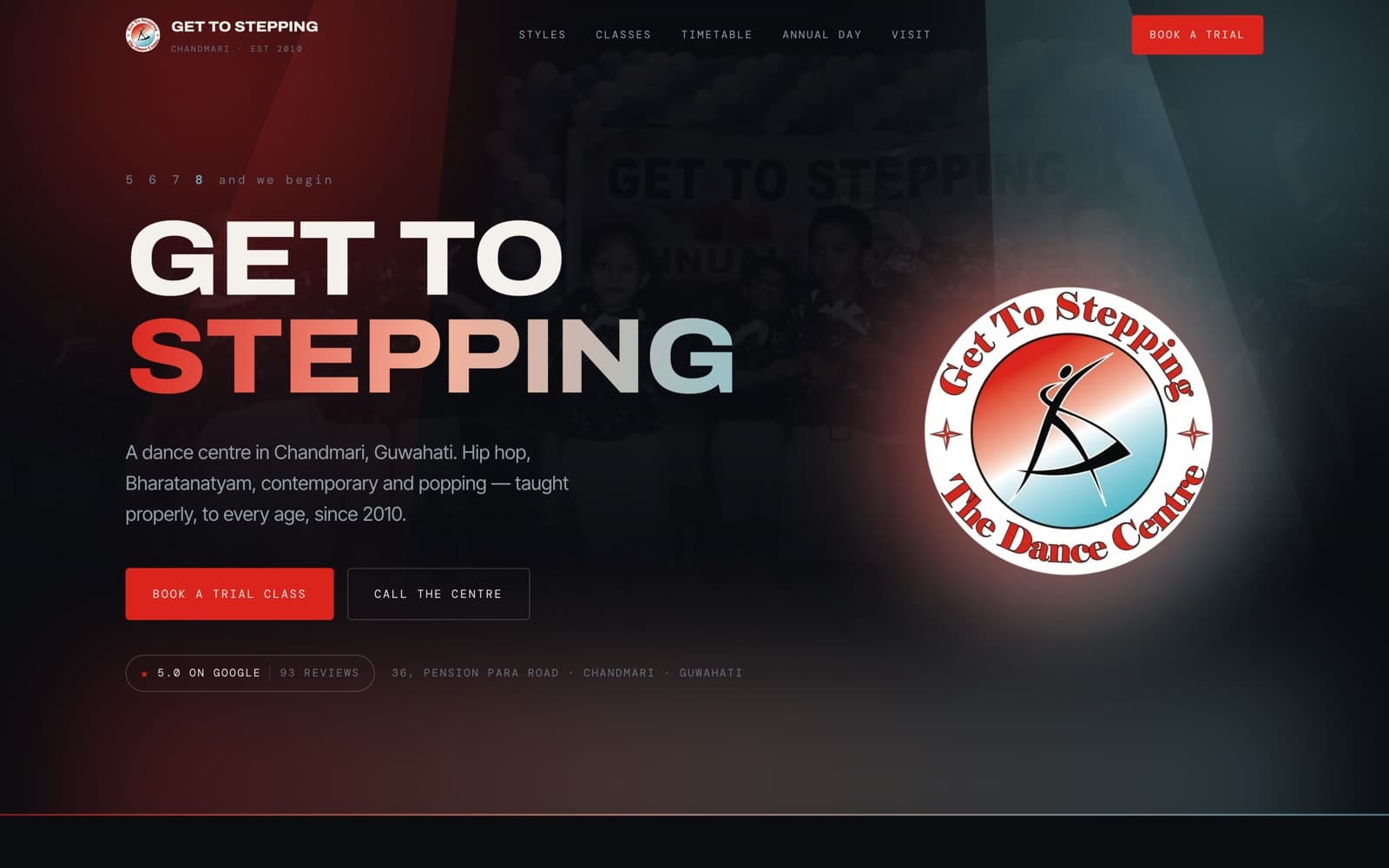
Get To Stepping
Built from their Google listing and three annual-day photos. The dark ground was chosen because every photo they had was a low-light stage shot.
- Location
- Chandmari, Guwahati
- Trade
- Dance centre, est. 2010
- On Google
- 5.0 from 93 reviews
- Status
- Built on spec
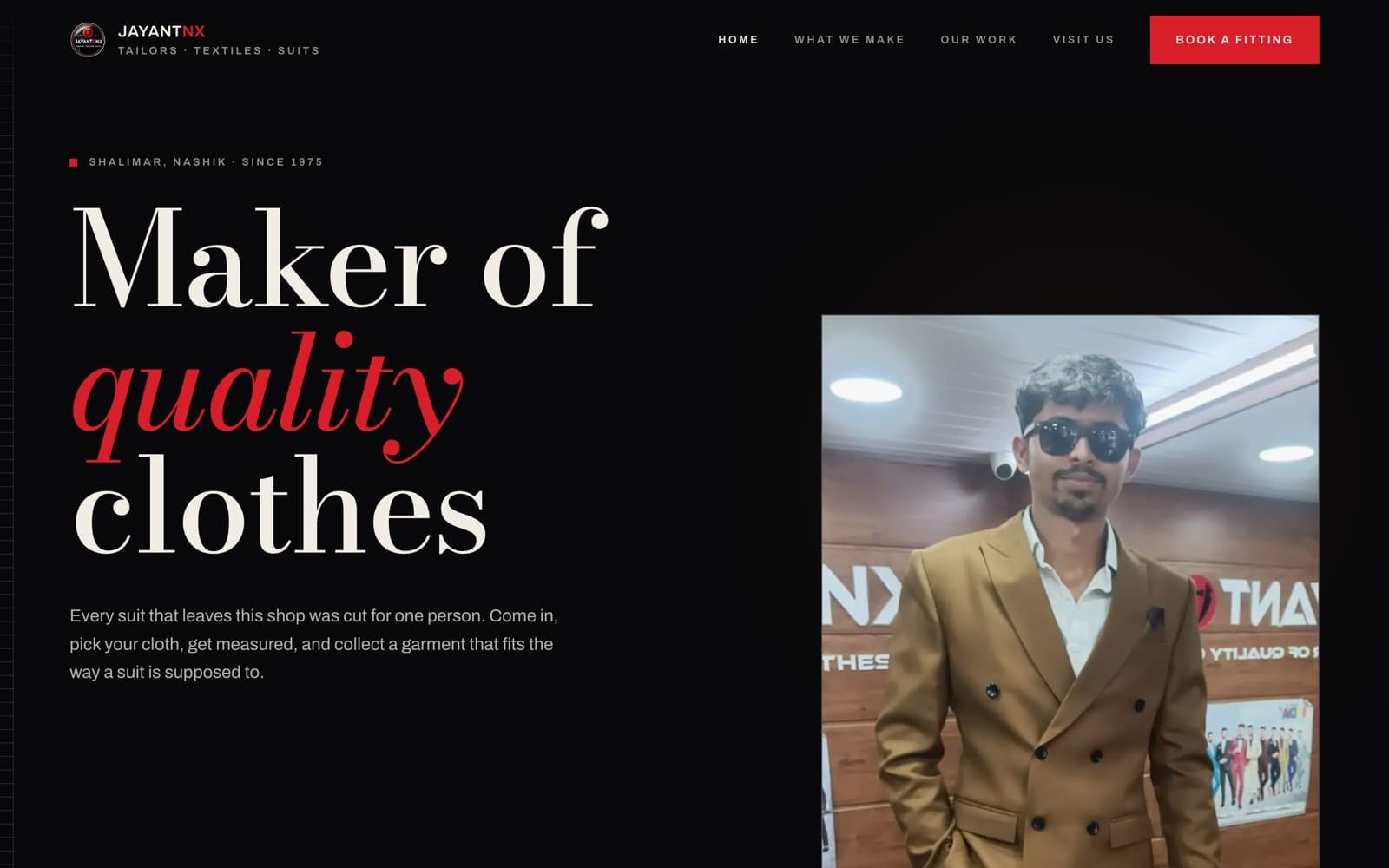
Jayant NX
A shop trading since 1975. Four pages, fully static, and readable even when JavaScript never arrives.
- Location
- Shalimar, Nashik
- Trade
- Tailors and textiles, est. 1975
- On Google
- 4.8 from 39 reviews
- Status
- Built on spec
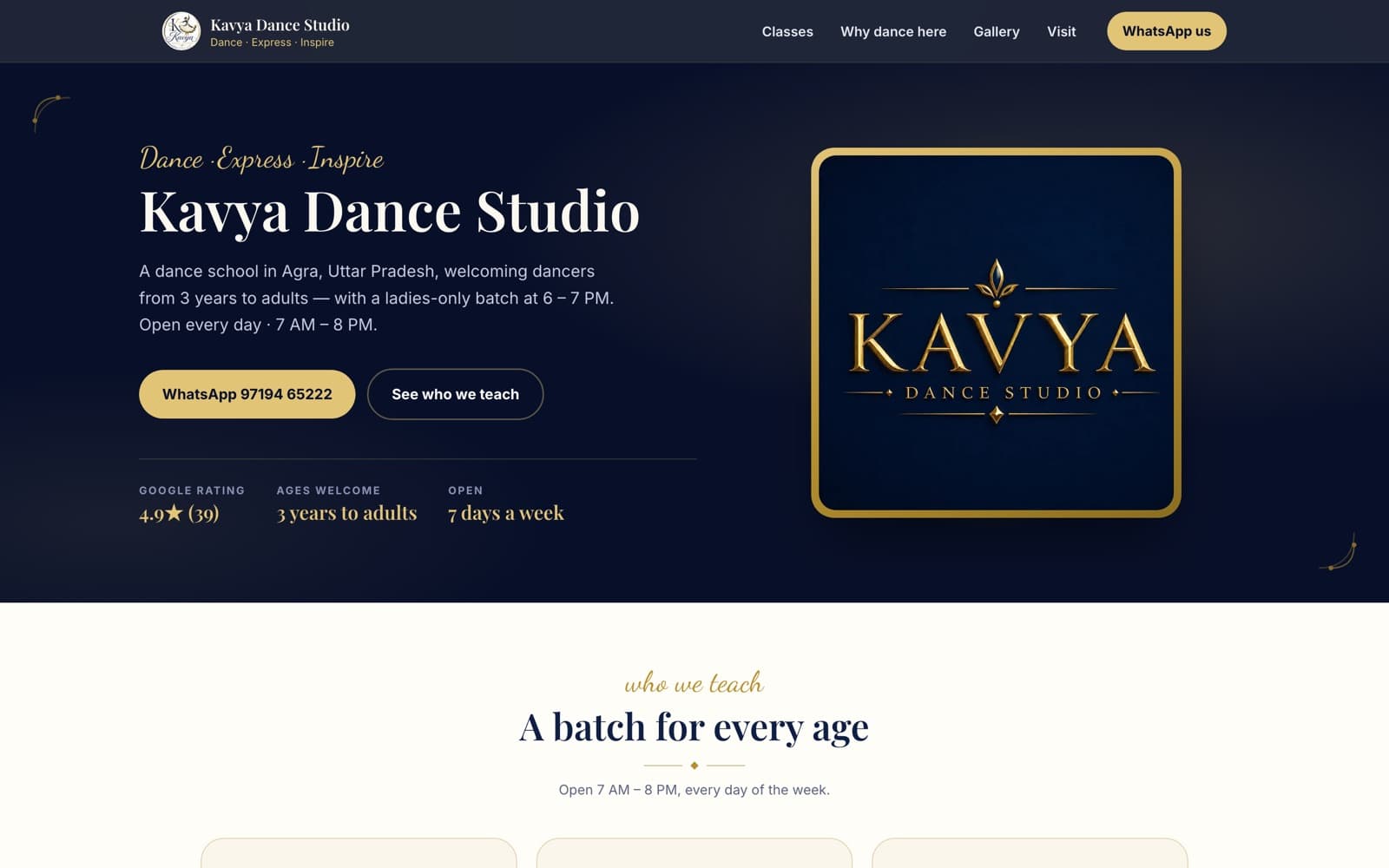
Kavya Dance Studio
Their rating, every batch, and a WhatsApp button that is never more than one tap away.
- Location
- Agra, Uttar Pradesh
- Trade
- Dance school, 3 years to adults
- On Google
- 4.9 from 39 reviews
- Status
- Built on spec
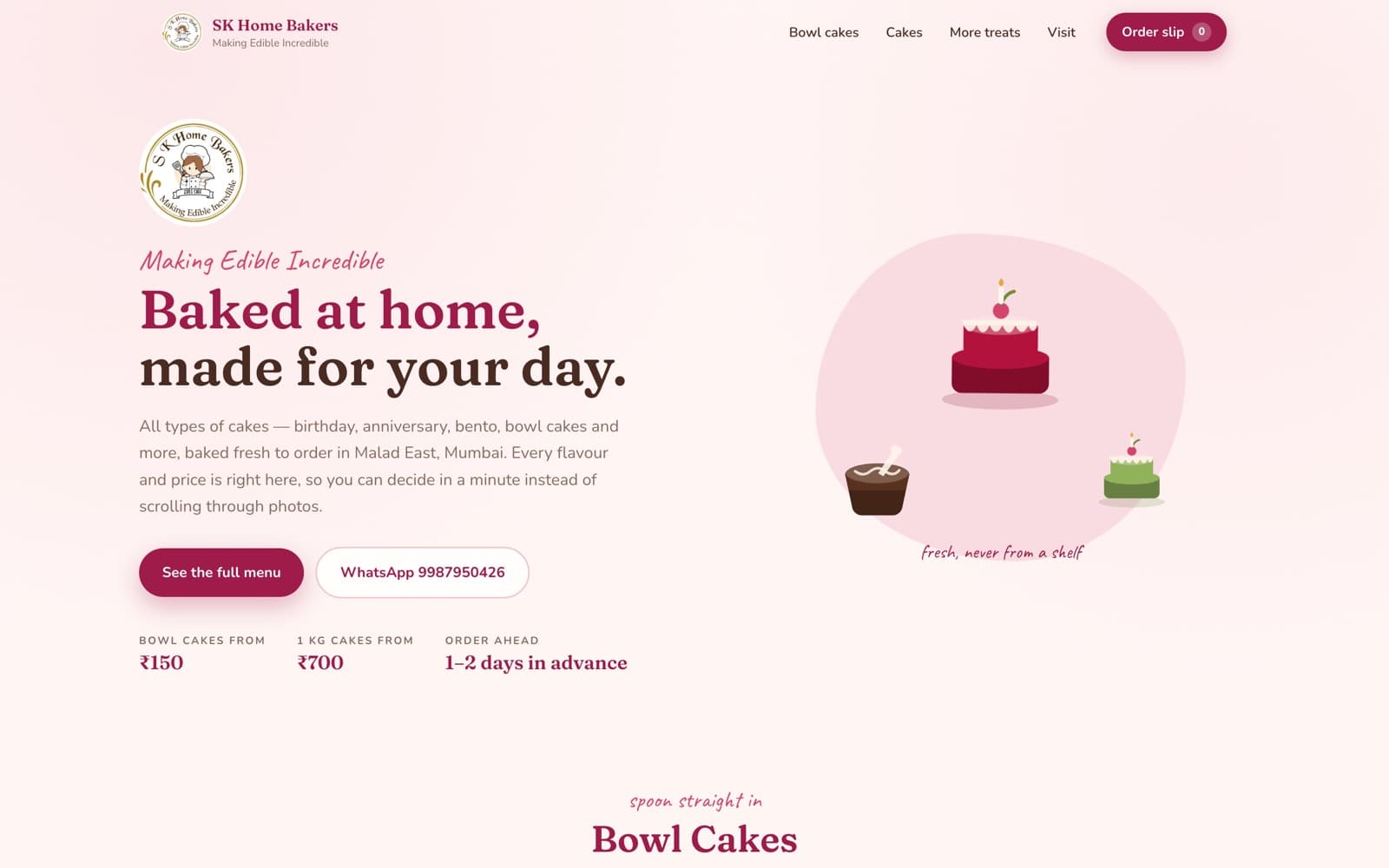
SK Home Bakers
Every cake and every price on one page, with a pre-order that arrives itemised instead of as twenty photos.
- Location
- Malad East, Mumbai
- Trade
- Home bakery, made to order
- Menu
- Every cake, every price, one page
- Status
- Built on spec
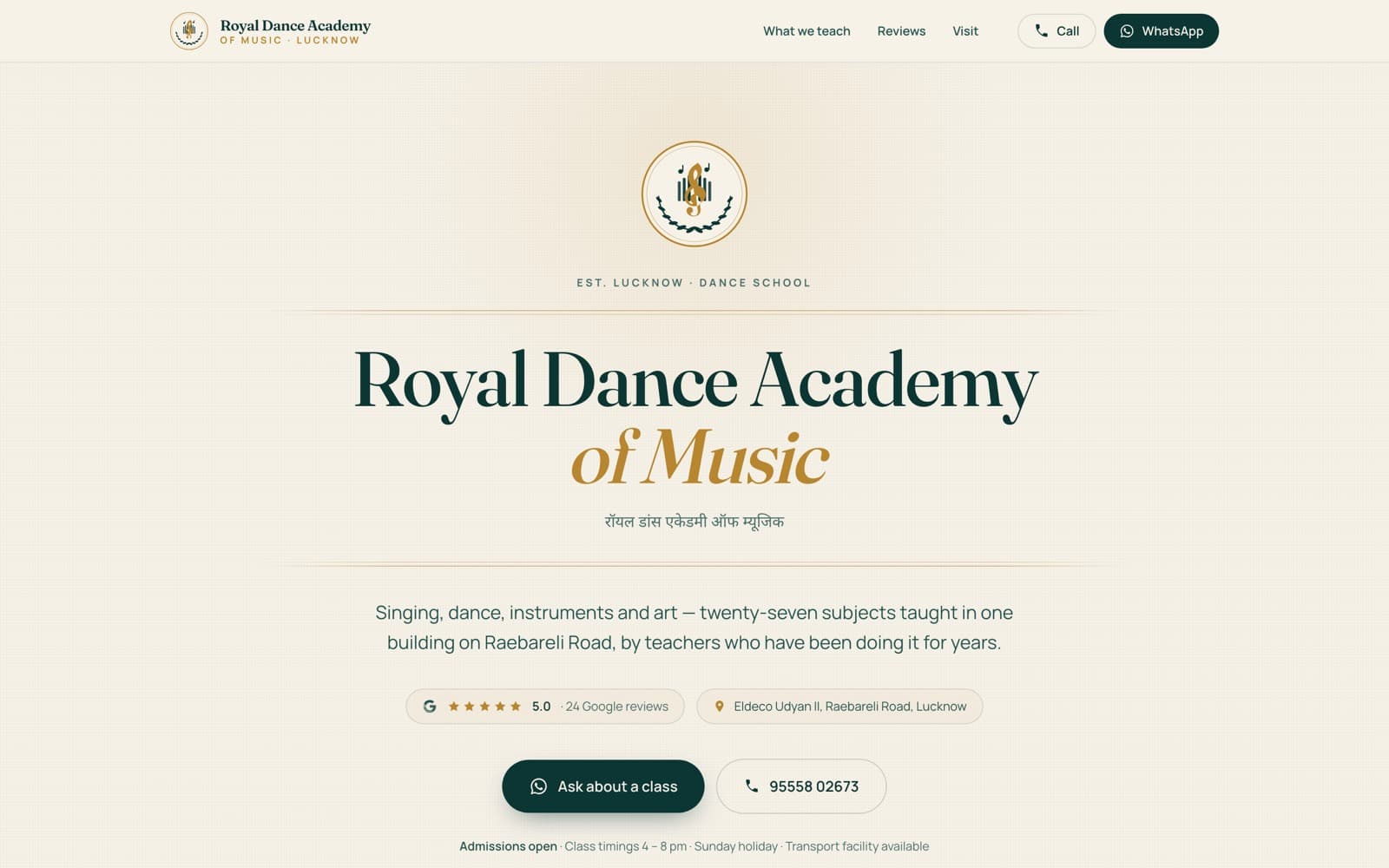
Royal Dance Academy
Twenty-seven subjects across four faculties, taken off their own printed poster. Set like a concert programme, because that is what the list deserved.
- Location
- Eldeco Udyan II, Lucknow
- Trade
- Dance and music academy
- On Google
- 5.0 from 24 reviews
- Status
- Built on spec
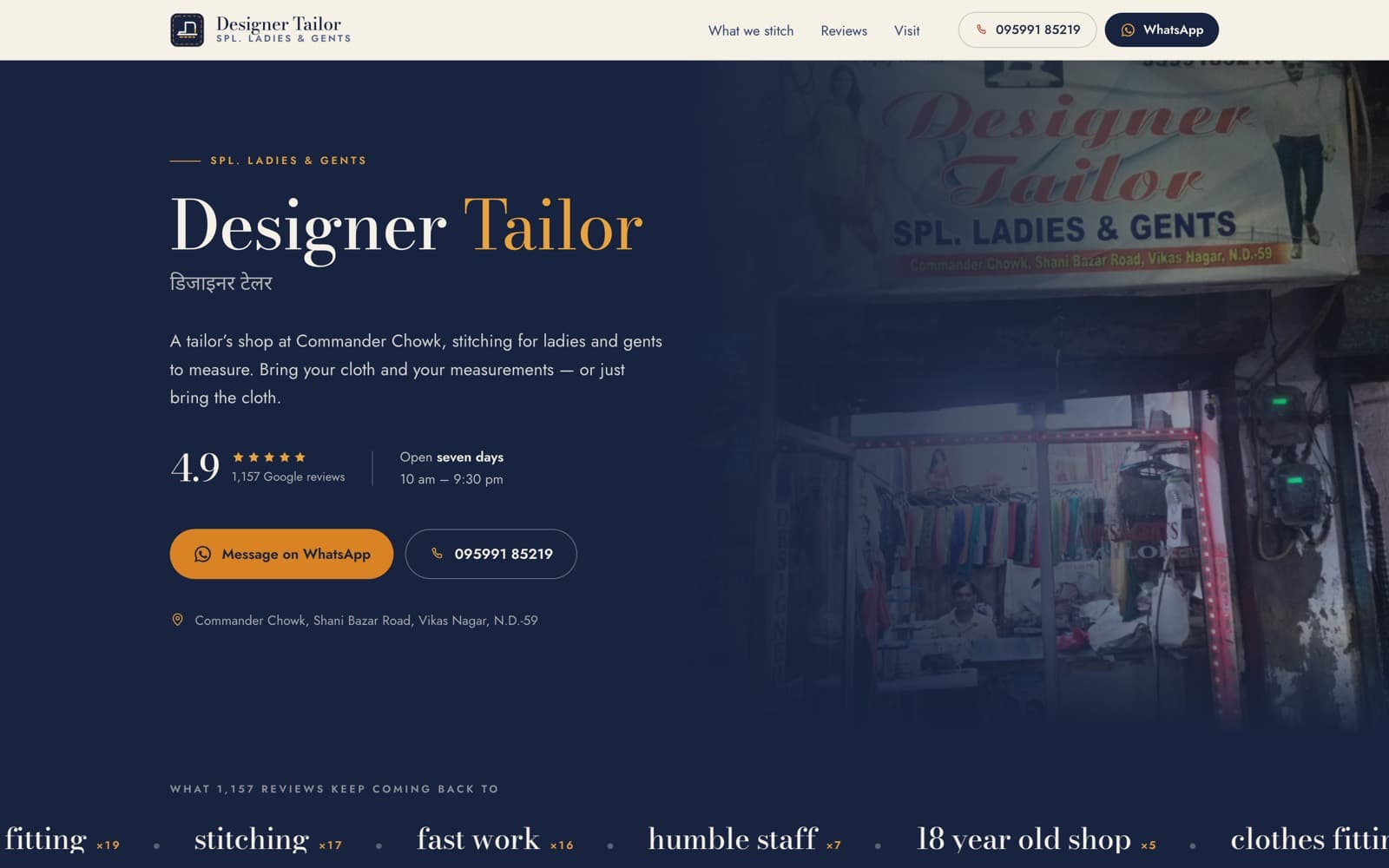
Designer Tailor
Built from a listing with 1,157 reviews and an empty website field. The garment list is their own signboard, copied word for word, Devanagari included.
- Location
- Uttam Nagar, New Delhi
- Trade
- Ladies and gents tailor
- On Google
- 4.9 from 1,157 reviews
- Status
- Built on spec
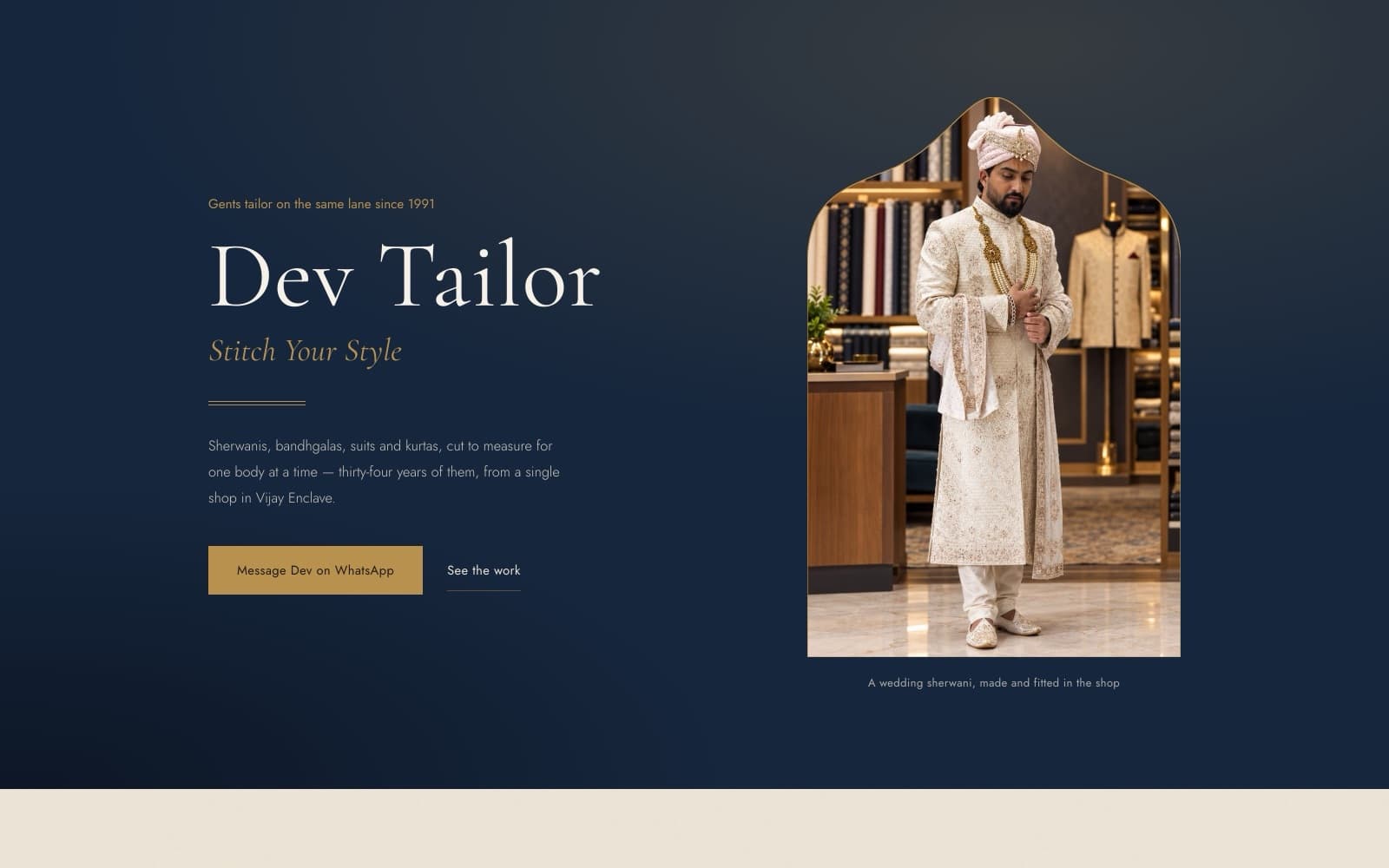
Dev Tailor
The only list of services this shop has ever published is three pictograms on the board by its door — a sewing machine, a suit, a pair of scissors. The site is the first time they are written down in words.
- Location
- Vijay Enclave, New Delhi
- Trade
- Gents tailor, est. 1991
- On Google
- 5.0 from 178 reviews
- Status
- Built on spec
Why bother
Six questions you are already being asked.
Every one of these is being asked about your business today, by someone you will never meet. Tap one and see both answers.
They ring. Nobody picks up — you are teaching, or the shop is loud. They try the next place on the list.
It says so on the page. At 11pm. On a Sunday. Without anyone having to answer anything.
They ask a friend, who guesses. The guess is usually higher than the truth, and you never hear from them.
Your real prices, written by you. Nobody has to be brave enough to ask.
A map pin two streets off, and a photo of a building that has since been painted.
The address, the landmark, and a button that opens directions in one tap.
They cannot tell, so they assume not. That is the quiet way most enquiries die.
A list of who you teach or what you make. They find themselves on it and stop wondering.
Four blurry photos from 2019 and a rating with no story attached.
Your actual work, your reviews, your students on a stage. Proof, not adjectives.
They mean to call tomorrow. Tomorrow is busy. They forget.
One tap, and the message is already typed. The decision and the booking happen in the same minute.
And this is the part nobody mentions
Everything a customer finds about you was written by someone. Only one of them was written by you.
- What a friend tells themTheir friend controls this
- What an old listing site saysThe listing site controls this
- What Google decides to showGoogle controls this
- What a competitor impliesYour competitor controls this
- Your own websiteYou control this
A website is the only place your business speaks for itself. It cannot be out of date, wrong about your prices, or missing the thing you are best at — unless you let it be.
And the rest of it
The website is where most businesses start. Here is what the other pieces actually do — mechanism, not marketing.
Most enquiries do not die because someone said no. They die because nobody answered in time, and the next shop on the list did.
A website answers while you are teaching, baking or cutting cloth. It never gets tired of the same four questions.
It is also the only page about you that you actually control — so it is never out of date about your own prices.
A signboard gets judged in about a second. So does a profile picture at 32 pixels. The judgement is not about taste, it is about whether you look like you will still be there next month.
The bigger win is consistency. When your shopfront, your website and your Instagram look like the same business, you read as one established thing instead of three half-finished ones.
A mark also has to survive being small, one colour, and printed badly on a bill. Most logos are designed at poster size and fall apart everywhere they are actually used.
Conventions, not laws. They shift by culture and by trade, so we test them against your customers rather than against a chart.
Timings, price, location, availability. That is most of your inbox, and every one of them arrives when you are in the middle of something else.
An assistant on your own number replies instantly, at any hour, in your words — and hands over to you the moment a message is anything more than routine.
It also writes down who asked. Enquiries stop scrolling away under twenty newer messages, which is where most of them currently go.
Your Google listing is usually the first thing anyone sees, and usually the least looked-after. Hours, address, photos and category being right is unglamorous and it matters more than the website design does.
Reviews are the closest thing you have to a stranger vouching for you. Asking for them properly, at the right moment, is a habit rather than a campaign.
Everything pointing at the same phone number, the same name and the same photos is what makes you look real.
How it works
Three stages. You only act on the last.
Most studios ask you to imagine the website, agree a price and trust them. We think that is backwards, so we do the work first and carry the risk ourselves.
Usually on Google Maps or Instagram. We read your reviews, look at your photos, and work out what a customer is actually trying to find out before they walk in.
Not a mockup or a template with your logo dropped in. A finished, live website you can open on your phone and send to your family. This takes us a few days and costs you nothing.
Open the link. If it is not right, say so and we will fix it or walk away — no hard feelings, no invoice. If you want it, we hand it over on your own domain.
What we do
Websites, and everything around them
The website is where most businesses start with us. It is rarely where they stop.
One page or several, built for a phone first, because that is where every one of your customers will open it.
A mark, colours and type that hold up on a signboard, a bill and a phone screen. If you already have a logo we will work to it rather than replace it.
Most businesses do not have copy sitting ready. We write it from your listing, your photos and one conversation, then you correct us.
Your listing cleaned up, proper page titles, business schema, real hours and address — so you turn up when someone searches your area, not just your name.
An assistant on your number that handles the four questions you answer twenty times a week — timings, prices, location, availability — and passes anything real to you.
Photos that are worth showing, a profile that matches across Google, Instagram and your site, and a plan for what to post that you can actually keep up with.
Set up in your name, not ours. If you ever leave, it leaves with you.
Prices move, timings change, a new photo arrives. Send it across and we update it.
Who you get
Five of us. One pair of hands on the build.
Small enough that the person who reads your reviews is the person who writes your pages. Nothing is passed down a chain, because there is no chain.
Builds it
Shared
Shared
Shared
Social, graphics, edit
iota Design, build, copy, domains and everything that goes live. One pair of hands on the thing you actually receive, so nothing gets lost between people.
Between the rest of us finding businesses worth building for, ideas and direction, social media, content and photography — which is how a studio this size finds the businesses it builds for in the first place.
Questions
The things everyone asks
Why would you build it before I pay?
Because describing a website is harder than showing one, and you have no reason to trust a stranger's promise. This way you are judging something real. It costs us a few days; it costs you nothing.
What is the catch?
There is none, but there is a limit — we can only do this for a few businesses at a time. If you say no, we lose the time and you keep nothing. That is the deal, and we are fine with it.
What does it cost?
A typical one-business website is ₹15,000, split in half — ₹7,500 to start and ₹7,500 when it goes live — then ₹4,000 a year from the second year for the domain, hosting and up to 12 small updates. Bigger jobs cost more and we will say so before you commit. The full breakdown is on our terms page, and you will have your own number in writing before you pay anything.
Do I need to know anything technical?
No. You send photos, prices and timings on WhatsApp. We do the rest, including buying and configuring the domain.
Is what you show me finished, or is it a rough version?
It is finished. What you open is the real site — every page, every price, live on a real address, working on your phone. Nothing is a placeholder and nothing is half-built. Open any of the sites above and judge for yourself.
What if I already have a website?
Then we will tell you honestly whether it needs replacing. Sometimes it does not, and we will say so.
Start here
Tell us the name of your business. That is enough to begin.
We’ll look you up, build something, and send you a link. If you like it, we talk about money then — not before.